By Tom Clouse
This is a special post for people with SUVs and Vans. The Prius can give you climate control in ready mode, so you can skip this.
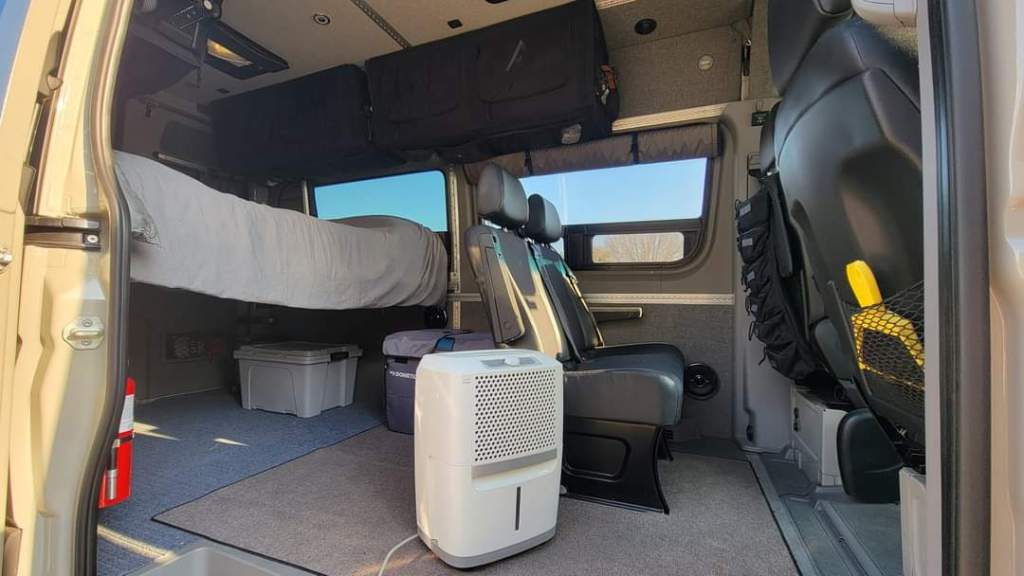
Winter camping and Moisture Control, it’s that time of year again!
Soon we will be getting our heaters fired up to stay warm and cozy….with that it’s a great time again to talk about moisture control inside the van.
It’s critical to control moisture on any front possible to prevent mold formation and/or the dreaded “Funk/smell” from taking over the inside of your favorite camper.
Vent Fans, Heaters & Cooking:
There are many ways moisture can get into your van…cooking with open flames, direct fired heaters (Buddy heaters), showers, bringing in wet cloths, leaking body trim clips, just breathing and sometimes its raining outside and your dealing with 100% humidity. I try and control moisture on any front that I can to keep the inside of the van as moisture free as possible. I’m running an indirect fired heater (Espar D2) so any combustion gasses/moisture are vented outside. Try and avoid any direct fired heater (Mr. Heater) as a byproduct of combustion is moisture and these heaters will add a lot of moisture to the inside of your van. We usually do all of our cooking outside but sometimes I will fire up the Jetboil or backpack stove inside when needed, I then crank up the roof vent above where I’m cooking (we have powered Maxx Fans front and back) and crack the side window accordingly to vent out the moisture produced from cooking.
When sleeping we keep the fan above our bed on at least 10% exhaust (winter or summer, although summer may be higher speeds) and keep the front CLR side window cracked open for a fresh air intake. The heater just runs more to keep the interior warm and the warm air exhausting out the top of the van helps carry out moisture produced from breathing while we sleep. We also have a LOT of glass since our camper started life as a passenger van so we cover all the windows with insulated window covers from Vanmadegear. This helps keep the interior warmer and keeps moisture from condensing on the glass over night.
Insulation:
We have our van very well insulated with 3M SM600L insulation all the way around which helps in keeping moisture from condensing in the ceiling and walls. If your running a heater in your van with no insulation then proper venting is even more important as you will be condensing a lot of moisture in the ceiling and walls and your van WILL develop the dreaded FUNK over time (A nasty musty oder). We originally were using our D2 heater in our stock passenger van with just a front window cracked and no roof vents, the van was developing the funk that couldn’t be aired out before we tore out the interior to do the conversion. If your running your van with a heater and no insulation see below…
Dehumidifier while driving & parked:
When winter driving I always leave the AC on (even if using heat) to capitalize on it’s ability to act as a Dehumidifier and help pull moisture out of the van. Quick explanation on how it works: Cabin air flows through the AC evaporator where it comes in contact with the cold evaporator coils. This rapidly lowers the temperature of the air and causes moisture to condense (cold air holds less moisture than warm air). The water then flows out of the evaporator through the built in drain and drips out under the car. The cold dry air then passes over your heater core and is heated back up, now you have warm dry air 👍. This is why your AC automatically comes on when you turn on your defrost.
Driving with the AC on definatly helps but if we have been camping in the rain for several days I still find a little more is required.
Each time we get back from a trip I close up the vents, open up all the overhead Mule storage bags and put a 110v Dehumidifier inside the van to run for a couple days. Most of the time I get nothing, other times if we have been camping in the rain for several days I will get a good amount of water in the unit when I’m done. If it’s cold outside I will install the insulated window covers and fire up the D2 heater at the same time so that the Dehumidifier is running in warm air, warm air holds more moisture than cold air so this helps in getting the moisture to the Dehumidifier unit. The Dehumidifier doesn’t work in colder temps and you don’t want it to freeze (can damage the unit). This is a simple step after each trip that will help keep your van smelling fresh 👍
When parked you can also keep a bucket of Damp-Rid under the seat to help adsorb moisture. Damp rid is silica gel that passively absorbs moisture with no electricity needed, once they are used up they are disposable. You can pick these up relatively inexpensive from Amazon etc.
Now on to a more controversial topic…..Vapor Barriers.
There are two distinct camps here, those who favor Vapor Barriers and those are against Vapor Barriers. I personally believe in the No-Vapor Barrier theory and will explain my reasoning below.
Pass on the Vapor Barrier:
The metal walls of the van are already a perfect vapor barrier, by adding an interior vapor barrier you have now created a vapor barrier sandwich and any moisture that gets in between the two will be trapped with no way out…..and moisture can and will get in.
It’s almost impossible to install a perfectly sealed inner vapor barrier, and even if you managed to do so there are still ways for moisture to get in. Moisture can get into the insulation space by changes in temperatures, changes in pressures (Driving over mountain passes or even closing doors), leaking door handles, leaking body trim clips, leaking fans, leaking windows etc etc. If and when moisture does get in you will want a way for the moisture to be able to escape.
I use hydrophobic insulation (won’t absorb moisture) and have enough gaps and openings that moisture can easily escape. I use 3M SM600L insulation and it works perfectly for us. Again moisture control is extremely important!! (see above post).
Thought I would share what I have found works for us 👍
Hodakaguy
Reposted with permission from Tom Clouse

 Tiny Prius Travel